

Black History Resources
African American history is New York State history. We invite you to explore this resource page offering access to powerful objects from our History and Archaeology collections, educational tools for teachers and caregivers, online and in-gallery exhibitions, videos, and more. These resources are essential for deepening our understanding of the past, honoring the stories of Black New Yorkers, and supporting meaningful learning for all ages.
A new exhibition, Fashion and Faith, is the centerpiece of our Black History Month observance for February 2026. It will be on view from February 14 through July 19, 2026.
NYSM Exhibitions

Fashion and Faith: Hats of the Great Migration
Opening February 14, 2026
Discover the stories of Black women whose faith, resilience, and leadership shaped Albany during the Great Migration (1910–1970). Through 24 remarkable church hats, this exhibition reveals personal journeys of dignity, community, and hope that anchored Black life in New York’s Capital Region.
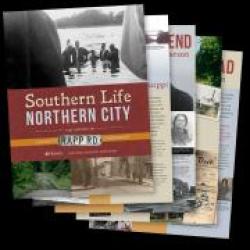
Southern Life, Northern City: The History of Albany’s Rapp Road Community
Online Panel Exhibit: Discover the Story of Resilience and Community
This panel exhibit explores the remarkable origins of the Rapp Road Community in Albany, New York. Born from the courage and determination of families who journeyed north from Mississippi during the Great Migration, the Rapp Road Community stands as a testament to hope, heritage, and the pursuit of a better life.
Brought to life by the New York State Museum, under the direction of Dr. Jennifer Lemak, Chief Curator of History, in collaboration with the Rapp Road Historical Association, this project honors the enduring legacy of those who built a thriving community against the backdrop of a changing America.
In the Spotlight

New Acquisition: Iconic Wartime Labor Portrait of George Williams
Learn how a focused foundry worker at Rochester’s Symington-Gould plant became the face of Western New York’s wartime production—and a powerful symbol of America’s fight abroad and at home.
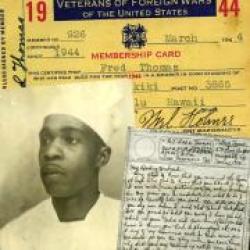
The Private Fred Thomas Collection
Explore this collection of documents, photos, and V-mail letters highlighting the service of Private Fred Thomas and the experiences of his wife, Josie, on the WWII Home Front, offering a unique glimpse into the life of an African American serviceman during the war.
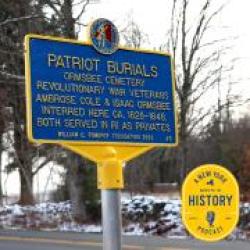
NY Minute in History Podcast: Patriot Burial Markers - Ormsbee Cemetery and the First Rhode Island Regiment
Discover the incredible story the legendary Rhode Island Regiment, a multiracial combat regiment that served through the entirety of the American Revolution.
On View at the NYSM
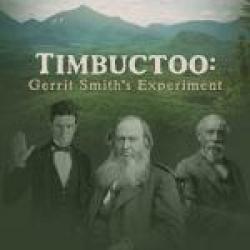
Timbuctoo: Gerrit Smith’s Experiment
Discover the history of Timbuctoo, a little-known Black settlement near Lake Placid, New York, established in 1846 by abolitionist Gerrit Smith in hopes of securing voting rights for the 3,000 black men who settled there. The exhibition features a short video by filmmaker Paul A. Miller about the insurmountable challenges its settlers faced as they fought to establish their unique community amidst New York's Adirondack mountains.
View Exhibit Information:
http://www.nysm.nysed.gov/exhibitions/news/timbuctoo-gerrit-smiths-experiment
Related Resources for Educators:
CTLE (from WMHT):
https://www.wmht.org/education/ctle/
Consider the Source (from NYS Archives):
https://considerthesourceny.org/featured-collections/learning-activities-diversity-and-collaborative-knowledge-program/northern-new-york-learning-activities-diversity-and-collaborative-knowledge-program
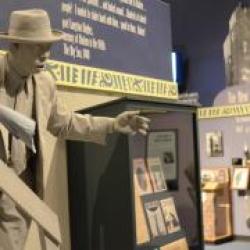
Black Capital: Harlem in the 1920s
Discover the rich and diverse culture of Harlem, New York, in the 1920s and 1930s.
Museum Resources and Research
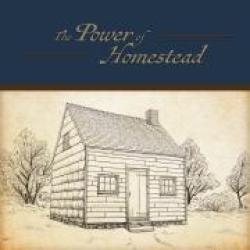
Past Exhibition: The Power of the Homestead
This exhibition told the story of the Powell family, beginning with Thomas and Betty Powell, a couple that had been enslaved by the Fonda and Lansing families near Boght Corners north of Albany, NY. Thomas, Betty, and their descendants maintained the ownership of a homestead and farm for 140 years while experiencing triumph, tragedy, success, and loss.
The First Step to Freedom: The Preliminary Emancipation Proclamation Educator’s Guide (PDF)
This guide was developed around President Abraham Lincoln’s Preliminary Emancipation Proclamation of 1862, a draft of which is in the collections of the New York State Library.
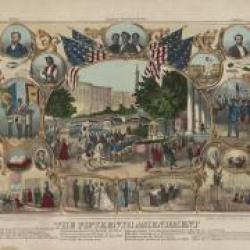
Fifteenth Amendment: Educational Activities
This online guide includes several object-inquiry activities. By exploring primary source materials around the topic of national enfranchisement of Black American men through the ratification of the 15th Amendment, students will develop a better understanding of the context surrounding this important step in America’s history.
http://www.nysm.nysed.gov/fifteenth-amendment
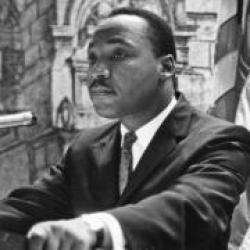
Dr. Martin Luther King Jr.’s Address to the New York State Civil War Centennial Commission
View information and download educator guides designed to provide strategies and resources for teaching about the Civil Rights movement and Dr. Martin Luther King, Jr.
Video & History:
http://www.nysm.nysed.gov/mlk-1962-address
Educator's Guide:
http://www.nysm.nysed.gov/sites/default/files/mlk-educatorsguide.pdf
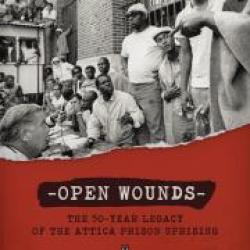
Open Wounds: The Fifty-Year Legacy of the Attica Prison Uprising
This exhibition seeks to present the various viewpoints of the September 1971 Attica prison uprising and its aftermath. It will also discuss the wider impacts of the event and create a dialogue as to why this story is important fifty years later.
Exhibit Information & Video:
http://www.nysm.nysed.gov/exhibitions/open-wounds-attica-prison-uprising
View/Download Panels (PDF):
http://www.nysm.nysed.gov/common/nysm/files/attica_panels_a.pdf
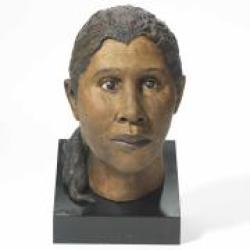
Schuyler Flatts Burial Ground
In 2005, the discovery of human remains during construction in Colonie, NY, offered a unique view of slavery in rural colonial America. Learn more about the history of the Schuyler Flatts Burial Ground. http://www.nysm.nysed.gov/research-collections/archaeology/bioarchaeology/research/schuyler-flatts-burial-ground Classroom Resource: Forgotten Bones: Uncovering a Slave Cemetery by archaeologist and children’s author, Lois Miner Huey, offers an informative and age appropriate look into the work of archaeologists as they “pieced together the truth” around the individuals whose human remains archaeologists discovered at Schuyler Flatts. Huey compares archaeological research with the historical record to show how different forms of evidence are needed to create a better picture of the lives of the people enslaved at Schuyler Flatts. Forgotten Bones helps younger readers learn about the enslavement of people in New York, the different types of primary resources available to learn about people who were enslaved, and how archaeology can help tell the story of those who were enslaved.
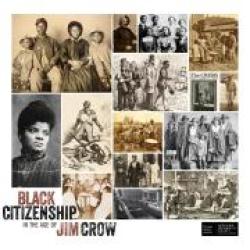
Black Citizenship in the Age of Jim Crow
Black Citizenship in the Age of Jim Crow details the national story of the struggle for Black equality after the end of slavery and through the Jim Crow era. A link is provided to the Educator's Guide created by the New-York Historical Society website.
http://www.nysm.nysed.gov/exhibitions/black-citizenship-age-jim-crow(link is external)
Additional Resources from the Office of Cultural Education
State-wide Black History Month Events
Discover Black History Month events happening across New York State with this comprehensive list from the Office of State History.

New York State Library
The NYS Library maintains several collections related to Black history in New York State, from the Preliminary Emancipation Proclamation through the Harlem Renaissance, and more in between. Ask a Librarian for help with exploring Black history at the NYS Library! You're making history, too, and the NYS Library wants to hear from you! Is there a Black artist, writer, scientist, friend, or family member who has inspired you? Share your story!
NYSL Talking Book & Braille Library
Resources about Black History are available at your library! The NYS Talking Book and Braille Library (TBBL) is a free library service for eligible residents of upstate New York who are unable to use standard print materials due to a visual, physical, or reading disability. The TBBL collection is similar to what’s found in a large public library, including popular fiction and nonfiction titles, as well as informational and recreational materials for all ages and tastes. Learn more about TBBL services and sign up at their website!

New York State Archives
For New York State Educators! Discover a continuously expanding collection of document-based activities created by the Archives Partnership Trust and teachers around the state through Consider the Source Online: Teaching with Historical Records.
For Black History Month, connect your students with ready-to-use archival resources and learning activities aligned with the NYS Learning Standards:
https://considerthesourceny.org/featured-collections/black-history-month-resources
On Display
In celebration of Black History Month and Women’s History Month, the NYS Archives presents, Opening the Airways. This display will feature documents, photographs, and ephemera from the State Commission Against Discrimination highlighting the stories of aspiring Black female flight attendants who fought to break the color barrier in the sky. Records will be on view in the 11th floor lobby of the Cultural Education Center throughout the months of February and March.


PBS
Learn more about Black culture and history in New York State and beyond with PBS Learning Media. The variety of multimedia support materials for the classroom are suited for grades PK–12.
https://ny.pbslearningmedia.org/shared/1165858/6602361
View Online:
WMHT | North to New York
https://www.wmht.org/north-to-new-york/
WSKG | North to Freedom
https://www.wskg.org/north-to-freedom
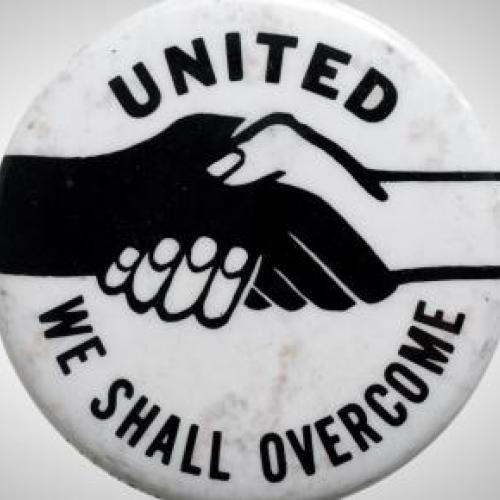
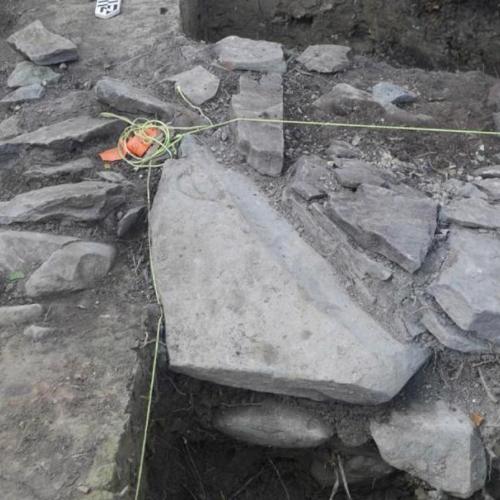
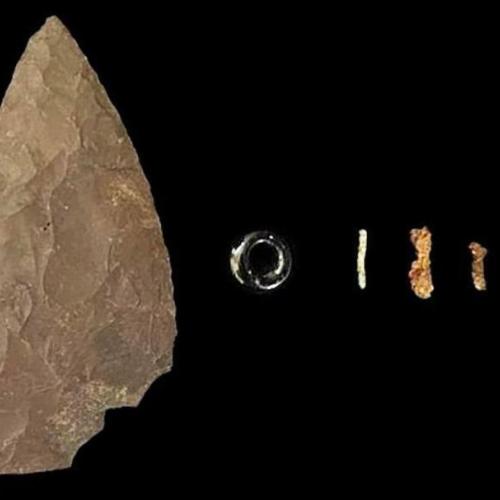
Discover more about the historical and archaeological artifacts featured in the banner above. View all »
NYSM Videos & CTLE
About NYSM CTLE Credits
The New York State Museum is an approved provider of Continuing Teacher and Leader Education (CTLE). Educators can earn 2 hours of CTLE credit by watching the webinar and completing the surveys linked below each video. Please allow up to two weeks to receive confirmation of completion. View all available CTLE from the NYSM.
In The News

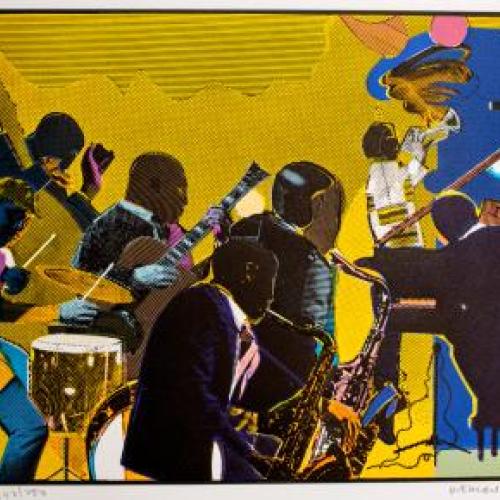
Painter and collagist Romare Bearden (1911–1988) favored subjects related to jazz throughout his career. Influenced by music in his work, among other things, Bearden visually evokes the lively qualities of jazz in this image using brilliant color and layered forms. Created in 1980, this hand-colored etching titled Jazz is now part of the New York State Museum Collection.
Romare Bearden
Jazz, 1980
Hand-colored etching
NYSM Collection, H-1981.29.1
A New York Minute in History Podcast
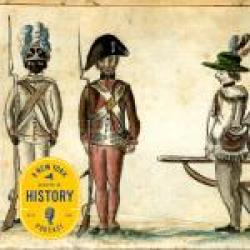
Plymouth Freeman and Unfinished Revolutions
Explore the story of Plymouth Freeman, a black Patriot who served in the Continental Army during the American Revolution, and the role the Declaration of Independence's principles of freedom and equality continue to play in disenfranchised communities.
The Florence Farming Association
This episode tells the story of the Florence Farming and Lumber Association, a settlement of free African Americans in Oneida Count that began in 1846. The Association was the creation of abolitionists Gerrit Smith and Stephen Myers, and was developed on land given by Smith, who at the time was New York’s largest landowner.
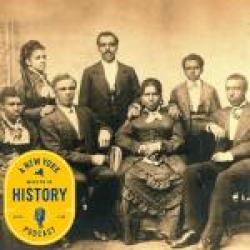
Aaron Mossell and the Struggle to Integrate Lockport’s Schools
Discover the contributions of the Mossell family in western New York, and their efforts to successfully integrate the Niagara County city of Lockport’s public schools in the late 19th century — nearly 80 years before legal segregation ended nationwide.
Ithaca’s Tuskegee Airman
Discover the stories of New Yorkers who served in WWII as part of the legendary Tuskegee Airmen, an all-Black group of pilots serving in the then still-segregated U.S. Army on the latest episode of A New York Minute In History.
Listen to the Podcast: Ithaca’s Tuskegee Airman
Educators: Online CTLE Form for Tuskegee Airman
Rapp Road and the Great Migration
Hosts Devin and Lauren delve into the history of Albany County’s Rapp Road Community, an African American neighborhood built by southern immigrants who moved north for a better life in the late 1920s.
Spirits of Sacrifice
Explore the lives of Henry Johnson and Tommy Hitchcock Jr., World War I heroes with ties to New York. Through interviews with family members, historians, and others, we follow Johnson and Hitchcock to the trenches and airfields of Europe and beyond.
Slavery in New York and Resistance to It
This episode explores slavery in New York and specifically the resistance to the institution, including the Underground Railroad. Co-hosts Devin Lander and Lauren Roberts speak with area experts and tour a historic home in Albany that is living a new life as a museum depicting the history of its previous occupants.
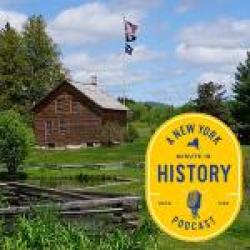
Discovering Timbuctoo
Devin and Lauren dive into the history of Timbuctoo, an African American settlement founded by philanthropist Gerrit Smith in response to an 1846 law requiring all Black men to own $250 worth of property in order to vote in New York state. To counter this racist policy, Smith decided to give away 120,000 acres of land to 3,000 free, Black New Yorkers, hoping to enable them to move out of cities and work the land to its required value.
Articles, Publications, and Additional Research
Advancement Comes Slowly: African American Employment in Rochester, New York During the Great Migration
http://www.jstor.org/stable/23185087
Science Tuesday: Uncovering Commeraw Stoneware
http://www.nysm.nysed.gov/research-collections/archaeology/historical-ar...
Science Tuesday: The Power of a Closer Look - Unearthing Personal Possessions of Enslaved African Americans
http://www.nysm.nysed.gov/research-collections/archaeology/historical-ar...
Collaborative field schools completed at Ten Broeck Mansion in Albany's Arbor Hill neighborhood
http://www.nysm.nysed.gov/research-collections/archaeology/historical-ar...
Slaves Rescued in Utica
http://www.nysm.nysed.gov/research-collections/state-history/notes/slave...
Betsey Prince Site
http://www.nysm.nysed.gov/research-collections/archaeology/historical-ar...(link is external)
The Archaeology of Slavery in the Hudson River Valley
http://www.nysm.nysed.gov/research-collections/archaeology/historical-ar...